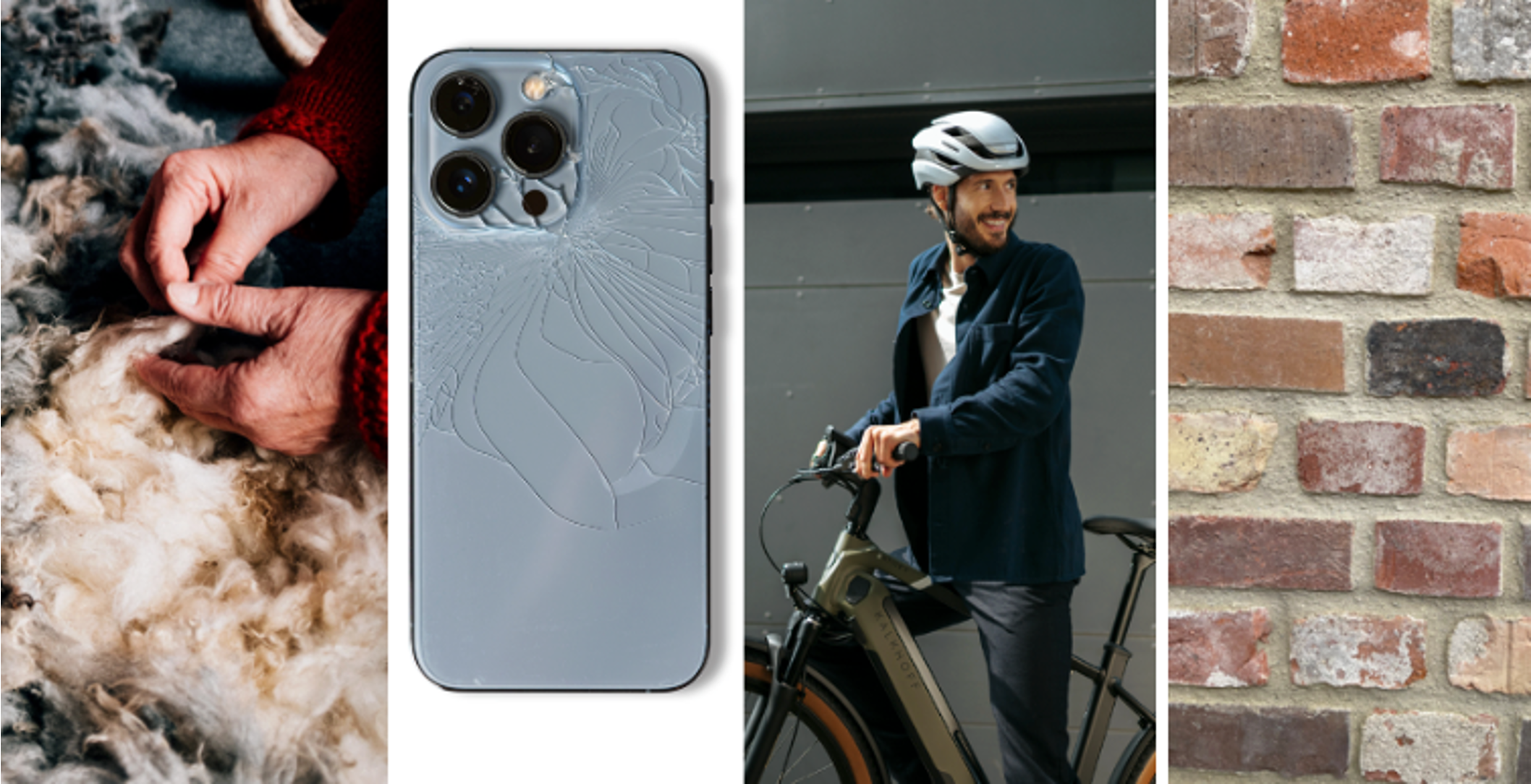
Kungsbacka Municipality had an inactive reuse scheme and limited circular flows of furniture, fittings and building materials. This prevented the municipality from achieving its sustainability targets and its Waste Management Plan 2030.
Solution
Xvii carried out an extensive feasibility study to lay the groundwork for circular flows:
Benchmarking other local authorities’ reuse initiatives
Two workshops using the "Double Diamond" design methodology
Development of business concepts with a focus on operational, financial, organisational and behavioural models
Real benefits
Results
The project produced a feasibility study report and a presentation for the steering group and the municipal leadership. The report served as the basis for the decision to introduce a viable reuse scheme that:
Extends
the lifespan of resources
Decreases
costs and environmental impact
Supports
the municipality’s sustainability targets and Waste Management Plan 2030
“Xvii is a highly committed and professional partner who are responsive and easy to work with.”
We can highly recommend them for similar projects!
On behalf of RE:Source, Xvii has carried out a study focusing on the circular economy in four of Sweden’s most resource-intensive sectors. The aim was to identify good examples of practical transition through case studies of companies working innovatively with resource efficiency and circular business models. The project resulted in four reports demonstrating how circular solutions can contribute to increased competitiveness and sustainable social development.
The project included: The reports:
A selection of resource-intensive sectors
Case studies of companies with circular initiatives
Mapping of business models, material flows and customer value
Awareness-raising work to inspire a broader transition
The circular economy in practice in the clothing industry
Challenge
The clothing industry faces major challenges in the form of linear business models, inadequate infrastructure for sorting and reuse, and competition from low-cost production. There was a clear need to demonstrate that circular solutions are feasible, profitable and create value.
Solution
Xvii conducted an in-depth study of five pioneering companies in the circular textile sector:
– Studies by Nudie Jeans, Once More, Biorestore, the Swedish Wool Initiative and Repamera
– An assessment of how resource efficiency and circular strategies are implemented in practice
– Documentation of challenges and the solutions developed
– Analysis of the current situation in the sector, with a focus on structural barriers
– Development of practical advice and tips tailored to different professional roles
Results
– A report featuring inspiring examples and practical advice
– Identifying key obstacles and solutions
– Practical guidance for various roles within the industry
– Highlighting collaboration across the value chain as a critical success factor
The report shows that circular solutions are economically viable and create value. It provides other industry players with practical tools and inspiration to begin their own transition to a circular economy, and highlights the need for industry-wide collaboration.
RE:SOURCE – The construction and property sector
Report 2
The circular economy in practice in the construction and property sector
Challenge
The construction and property sector faces structural challenges, with existing business models creating lock-in effects that hinder reuse and renovation. There was a clear need to demonstrate that circular solutions are feasible, profitable and create value.
Solution
Xvii carried out case studies of four innovative pioneering companies:
– Selection based on innovative work in the areas of resource efficiency and circular strategies
– A survey of how companies implement circular solutions in practice
– Documentation of challenges and the solutions developed
– Analysis of the current situation in the sector, barriers to transition, and relevant standards and incentives
– Compiling practical tips and advice tailored to different professional roles
Results
– A report featuring inspiring case studies and practical advice
– Identifying structural barriers and lock-in effects
– Practical guidance for various roles within the industry
– Highlighting the norms and incentives that influence development
The report shows that circular solutions are economically viable and create value even within a traditional industry. It provides other stakeholders with practical tools to begin their transition to a circular economy and helps to challenge existing business models and lock-in effects.
RE:SOURCE – Mobility and Transport
Report 3
Practical circular economy – mobility and transport
Challenge
The mobility and transport sector is heavily reliant on private car use and fossil fuels. The challenge was to demonstrate that circular solutions – through sharing, reuse, repair and recycling – are feasible, cost-effective and create value for a more resource-efficient transport system.
Solution
– Studies of Lease a Bike, Volvo Reman, GoMore and Autocirc
– An assessment of how circular design, production and behavioural changes drive the transition
– Documentation of challenges and the solutions developed
– Analysis of the current situation in the sector and structural dependencies
– Development of practical guidance for other stakeholders in the sector
Results
– Report containing concrete examples of successful circular business models
– Clarifying the path towards a resource-efficient transport system
– Practical guidance for various stakeholders in the industry
– Identifying needs: better conditions for sharing, stronger incentives and value propositions that go beyond environmental benefits
The report shows that circular solutions in the field of mobility are economically viable and can compete with traditional models. It provides other stakeholders with inspiration and tools for transition, whilst emphasising the need for systemic changes to enable wider adoption of sustainable transport options.
RE:SOURCE – The ICT sector
Report 4
The circular economy in practice in the ICT sector
Challenge
The ICT sector faces the dual role of digitalisation – as both an enabler of sustainable social development and a source of significant resource consumption. The challenge was to demonstrate that circular solutions involving collection, repair, reuse and resale are feasible, profitable and create value.
Solution
Xvii conducted case studies of three pioneering companies:
– Studies by GIAB, Foxway and Inrego
– An assessment of how circular business models contribute to a resource-efficient digital ecosystem
– Documentation of challenges and the solutions developed
– Analysis of the current situation in the sector and the dual role of digitalisation
– Compiling practical advice and tips tailored to different professional roles
Results
– Report featuring concrete examples of successful circular IT business models
– Identification of obstacles: scalability, inadequate logistics solutions and the absence of relevant SNI codes
– Practical guidance for various roles within the industry
– Highlighting the development potential of the reuse initiative
The report shows that circular IT solutions are economically viable despite structural barriers. It provides other stakeholders with tools for transition and highlights the need for systemic changes – including improved logistics and appropriate industry classification – to enable the scaling up of circular IT operations.
From a pilot project to a scalable second-hand shop
The company wanted to develop its own sourcing channels for second-hand products and integrate the second-hand business into its existing stores. The challenge was to establish efficient workflows, test the business potential and ensure traceability throughout the entire reuse process.
Solution
Xvii conducted a business experiment to explore the possibilities:
This work laid the foundations for the company’s continued expansion of its second-hand business and strengthened the company’s position within the circular economy.
Tried and tested
sourcing channels for second-hand furniture
Insights
on optimal levels for maintenance and replacements
Functioning
digital product tracking system
Clear
roadmap for integration into existing department stores
The challenge was to identify efficient workflows, assess the business potential and ensure traceability throughout the entire reuse process.
From an unsustainable to a circular business model in mobility
Volvofinans Bank faced a strategic challenge: its business model in the mobility sector was unsustainable in the long term. The bank had set out a vision and climate targets, but it was unclear how these targets were to be achieved, which caused concern within the organisation.
Solution
Xvii helped the bank analyse the current situation and develop a concrete strategy:
Materiality analysis, including customer insights, for the entire business
Define the company’s focus areas and two priority business areas
Workshops and brainstorming sessions to identify business opportunities linked to sustainability goals
Roadmap and action plan for the operational areas
Real benefits
Results
The work laid the foundations for the bank’s repositioning as Ziklo Bank, a player that actively contributes to sustainable mobility rather than being part of the problem. The project delivered a three-year roadmap comprising
:- Concrete initiatives for two business areas – Both internal initiatives and new customer offerings – A clear path from concern to action – A strategic foundation for the bank’s repositioning towards sustainable mobility
Specific
initiatives for two business areas
Internal
initiatives and new customer offerings
Clear
the path from concern to action
Strategic
basis for the bank’s repositioning towards sustainable mobility
The bank had set out a vision and climate targets, but it was unclear how these targets were to be achieved, which caused concern within the organisation.